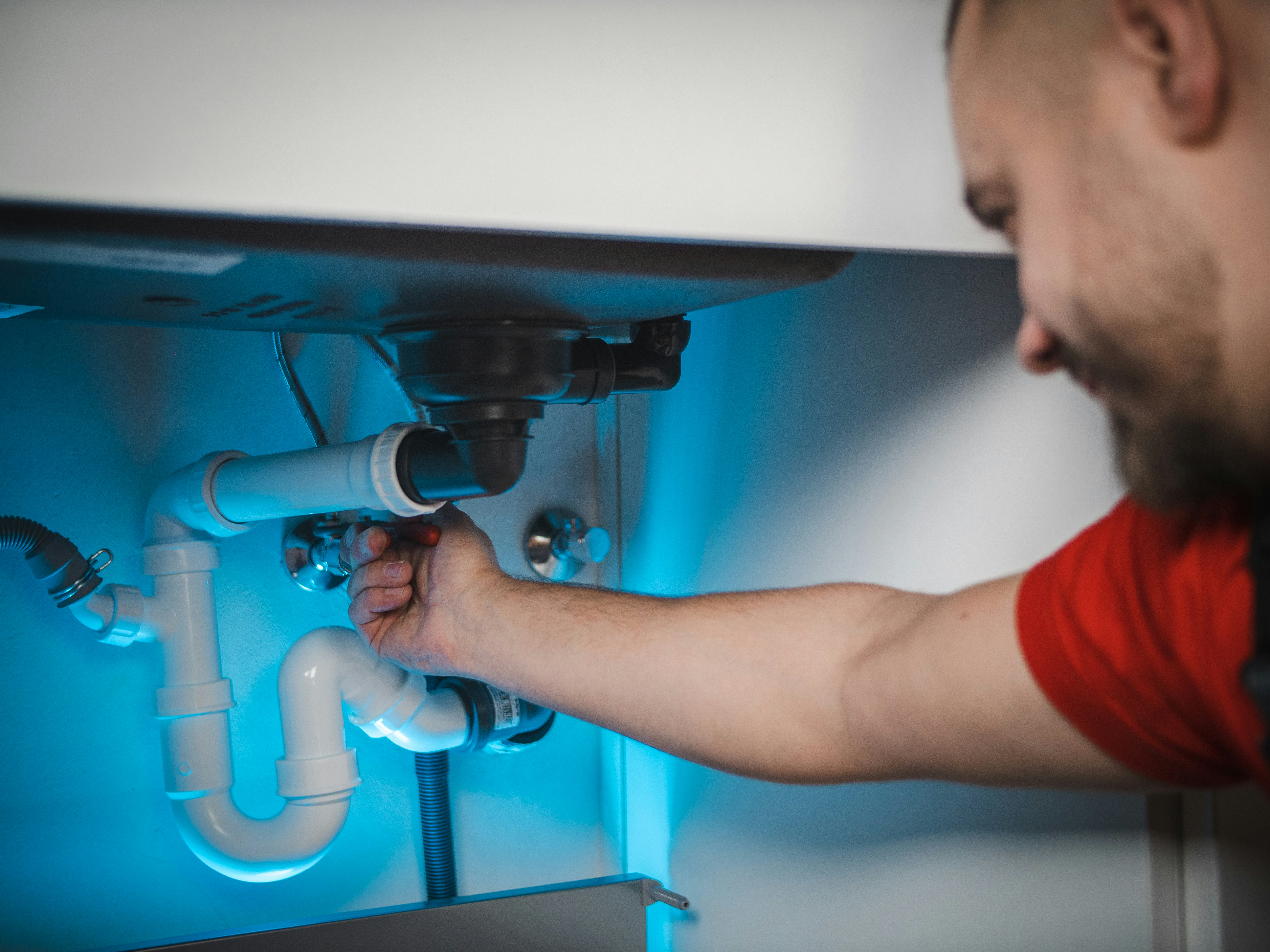
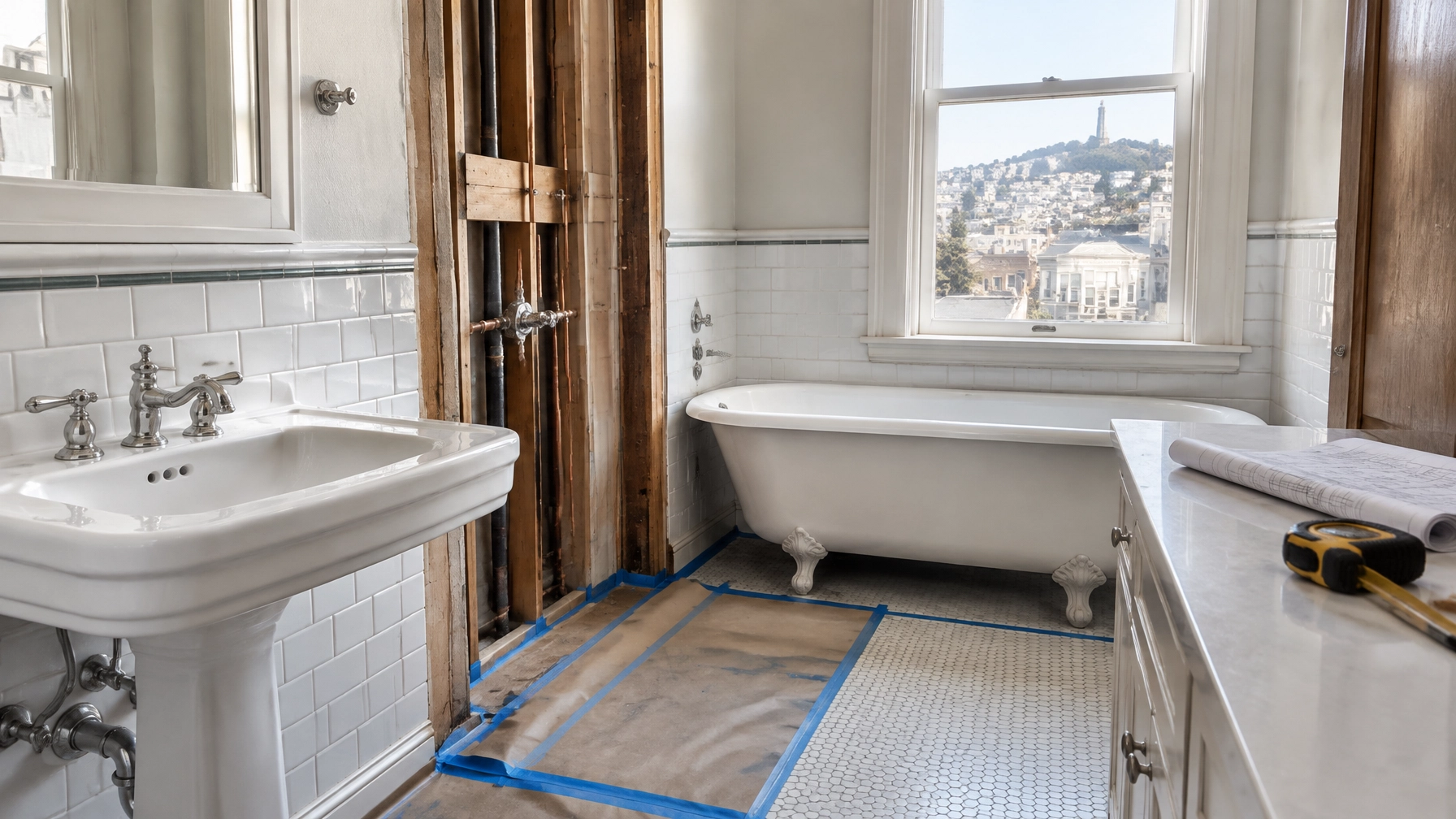
Not every plumbing action requires a permit, but the threshold is lower than most homeowners think. DBI doesn't publish a single public checklist that enumerates every plumbing task by permit status — the categories below reflect general practice for San Francisco plumbing permitting, not a specific DBI document. Treat them as a starting point and confirm your specific situation with DBI before starting work, even for items listed as commonly permit-free.
Generally requires a plumbing permit (verify with DBI):
- Moving any fixture (toilet, sink, shower, tub, dishwasher)
- Adding new fixtures (new bathroom, kitchen island sink, laundry hookups)
- Replacing a water heater (gas, electric, tankless, or heat pump)
- Rerouting supply lines or drain pipes
- Installing new gas lines or capping existing ones
- Sewer lateral repair or replacement
- Replacing main water shutoff or pressure regulator
Often requires a permit (verify with DBI):
- Replacing water heater with different type (gas to electric, tank to tankless)
- Adding water softener or filtration system that connects to plumbing
- Replacing bathtub with shower (or vice versa) — the drain and supply changes trigger permit
- Any repair that requires opening walls or floors
Often doesn't require a permit (verify with DBI for your specific situation):
- Replacing a faucet in the same location
- Replacing a showerhead
- Fixing a leak that doesn't require opening walls
- Replacing angle stops or supply lines under sinks
- Clearing a clog
The rule of thumb: if the water or drain path changes, or if walls are opened, you likely need a permit. When in doubt, verify with DBI before starting work.
Key code requirements that affect your plumbing project
Water heater seismic strapping.
California Health and Safety Code section 19211 requires all new, replacement, and existing residential water heaters to be braced, anchored, or strapped to resist falling or horizontal displacement due to seismic activity — this requirement applies on an ongoing basis, regardless of whether the property is being sold. The same section separately requires a seller to certify to a prospective buyer, at the time of a property transfer, that this bracing requirement has been met. That certification duty is an additional obligation triggered by a sale — it does not mean an existing, non-transferring water heater is exempt from the underlying strapping requirement.
If you're pulling permits for other plumbing work, verify that any existing water heaters on the property are compliant. Missing seismic strapping can fail inspection.
Water efficiency requirements.
California Code of Regulations Title 20, Section 1605.3 sets water efficiency standards for showerheads and other plumbing fixtures. Under this rule, showerheads manufactured after July 1, 2018 have a maximum flow rate of 1.8 gallons per minute at 80 PSI.
If you're designing a multi-head shower, specific interpretation of the multi-outlet flow rules depends on your configuration. Confirm compliance with your plumber based on your specific design.
Pressure regulator requirements.
California Plumbing Code Section 608.2 requires an approved-type pressure regulator, preceded by an adequate strainer, when static water supply pressure exceeds 80 PSI. If your property's pressure is above 80 PSI, a regulator is required for code compliance and to protect your plumbing system.
Interaction with San Francisco's all-electric renovations ordinance.
San Francisco's all-electric major renovations ordinance can interact with plumbing permits for water heater replacements and kitchen scope changes. See our San Francisco Electrification Rules guide for how this may apply to your project.
California code adoption cycle.
California adopts new building codes on a 3-year cycle. Verify which code cycle applies to permits filed in your target month with DBI or your plumber, and confirm your design complies with the current cycle before submission.
Verifying permit fees and timelines
Permit fees change annually. Rather than citing specific numbers that may become outdated, this guide directs you to primary sources:
Plumbing sub-permits are typically issued alongside a building permit for larger projects, or as standalone sub-permits for smaller work. Fees vary by number of fixtures affected and whether plan check is required.
Timeline expectations:
Most San Francisco plumbing sub-permits for standard residential work can be issued Over-the-Counter (OTC) at the San Francisco Permit Center, 49 South Van Ness Avenue. Complex projects — sewer lateral work requiring SFPUC coordination, water heater conversions with panel evaluation, whole-home re-piping, or work triggering Planning review — take longer.
Actual current timelines depend on DBI backlog, project scope, and any correction cycles required during review. Contact DBI directly or work with a San Francisco-experienced plumber for realistic timeline expectations for your specific project.
San Francisco-specific factors that affect your plumbing project
Water pressure varies by location.
San Francisco's water distribution system operates multiple pressure zones based on topography and elevation. Pressure at your specific property can vary significantly from the San Francisco average.
Never assume pressure — measure it. Your plumber should test pressure at the property before designing multi-outlet showers or large fixture additions. If pressure exceeds 80 PSI, a pressure regulator is required.
Sewer lateral responsibility.
Per SFPUC's sewer lateral guidance, the entire sewer lateral belongs to the property owner, who is responsible for maintaining it, including the upper and lower sections. If a plumber's inspection identifies a structural problem in the lower lateral that maintenance can't fix, SFPUC asks homeowners to submit a service request via 311 (or sf311.org) so its Sewer Operations team can inspect it — upper-lateral repairs remain the owner's responsibility to arrange and pay for directly.
Camera inspections can identify problems in your sewer lateral before renovation. Consider one if your property's sewer lateral hasn't been inspected recently, particularly if you're planning renovations that add fixtures or increase drainage load.
Older pipe materials.
Many San Francisco homes contain galvanized steel, older copper, or mixed material transitions from decades of repairs. This isn't automatically a problem — but material identification should happen before major work. If your renovation opens walls, plan for pipe inspection as a decision point.
Lead concerns.
San Francisco water mains do not contain lead per SFPUC. However, your service line, interior piping, solder, or fixtures may contain lead components. If you're renovating a bathroom or kitchen in an older home (particularly pre-1986, when Federal Safe Drinking Water Act amendments limited lead in plumbing components), ask your plumber to identify likely lead sources and address them as part of the project.
Common mistakes San Francisco homeowners make
1. Skipping the permit for "small" plumbing work.
Moving a toilet slightly, adding a bar sink, converting a tub to a shower — homeowners often assume these are minor. Most require permits. Unpermitted work becomes a disclosure issue at sale.
2. Not testing water pressure before design.
Multi-outlet showers designed for a specific pressure won't perform on a system that doesn't support them. A pressure test is a small upfront cost that can prevent significant fixture selection mistakes.
3. Assuming the sewer lateral is fine without inspection.
If you've owned the home for years and haven't had a camera inspection, you don't know your sewer lateral's condition. Renovations that add fixtures increase load on your existing sewer system.
4. Ignoring seismic strapping on existing water heaters.
If your water heater lacks straps per H&S §19211 and you're pulling permits for other plumbing work, expect inspection to flag it. Address at the same time as other work.
5. Using outdated fixture specifications.
Water efficiency requirements have changed over time. Fixture selections based on older code allowances may not pass inspection today. Verify with your plumber before ordering fixtures.
6. Choosing tankless without capacity analysis.
Tankless water heaters have rated capacity based on flow rate and temperature rise. Multiple simultaneous demands can exceed capacity of smaller tankless units. Match unit capacity to your peak simultaneous demand.
When to hire a licensed plumber vs. DIY
Hire a licensed plumber for:
- Any work requiring a permit if you're not doing it yourself under owner-builder status
- Any work involving the sewer lateral
- Any work on shared piping in condos, TICs, or multi-unit buildings
- Any work in walls, floors, or ceilings where mistakes are expensive to correct
- Any work where you're not certain of current code requirements
Owner-builder considerations:
Under California Business & Professions Code §7044, a property owner can perform plumbing work (including gas line work) on property they own and personally improve — this isn't limited to a primary residence — without a contractor's license, provided none of the improvements are intended or offered for sale, and the owner (or the owner's directly-paid employees) personally performs the work, following all permit and inspection requirements. This is the owner-builder exemption. (Homeowners doing this work on their primary residence most commonly rely on this provision, but the statute's scope is broader than "primary residence" alone.)
Owner-builders should note:
- Owner-builder work requires the same permits and inspections as licensed contractor work
- Owner-builders take on personal responsibility for meeting code
- One-year resale restrictions apply (see our Owner-Builder Permits guide)
- Some San Francisco property types may have additional restrictions
DIY may be OK (without owner-builder permit):
- Replacing a faucet in the same location
- Fixing minor leaks that don't require wall opening
- Adding under-sink filtration that doesn't modify plumbing configuration
- Replacing showerheads or other plug-in fixtures
Verify licensed plumber credentials:
If hiring a plumber, verify they hold an active C-36 Plumbing Contractor license at the California Contractors State License Board (CSLB) website using their license number.
Homeowner action plan
Before starting any San Francisco plumbing work:
1. Determine if a permit is required.
Use DBI's guidance or contact them directly. When in doubt, confirm the permit requirement before starting; our unpermitted-work guide explains the risks of skipping approval.
2. Test water pressure at the property.
A licensed plumber can perform this. Tells you what your system supports before you design fixtures.
3. Consider a sewer lateral camera inspection.
Especially if your property's sewer lateral hasn't been inspected recently. Identifies problems before renovation makes them expensive.
4. Verify existing water heater seismic strapping.
Check for compliance with H&S §19211. Add to permit scope if missing.
5. Get written scope from your plumber.
Include who pulls the permit, who schedules inspection, and who responds to any correction notices.
6. Verify contractor license.
C-36 for plumbing. Check on the CSLB website.
7. Budget contingency for infrastructure surprises.
Water pressure adjustments, seismic strapping, or sewer issues sometimes only become visible after work begins.
Related guides
Sources
Not sure which permits your specific San Francisco plumbing project requires? Permit Compass analyzes your renovation scope, identifies every required permit and sub-permit, generates pre-filled DBI forms, and detects property-specific factors — for $49.