San Francisco Bathroom Remodel Permit Guide (2026): What You Actually Need
John Nolan·July 8, 2026·Updated August 25, 2026·16 min read
Last updated: August 25, 2026
The short answer: Almost every bathroom remodel in San Francisco requires at least one permit. If you're only swapping fixtures in the same location — a new toilet in the same drain line, a new sink in the same countertop opening — you can sometimes skip a permit. Anything else (moving plumbing, adding electrical outlets, changing walls, converting tub to shower with different plumbing, replacing the exhaust fan wiring) requires a permit from the San Francisco Department of Building Inspection.
Getting caught doing unpermitted bathroom work is expensive: DBI can require you to open up finished walls for inspection, charge a substantial investigation-fee penalty permit, and sometimes require redoing work to code. It also becomes a legal disclosure issue when you sell.
Here's what you actually need to know — and what a rough permit-fee estimate looks like once you check it against DBI's current fee schedule rather than rounded guesses.
Do you need a permit to remodel a bathroom in San Francisco?
📄 Free download
Get the San Francisco Bathroom Permit Checklist
Every required permit, fee, and inspection step on one printable page. Bring it to your contractor meeting.
Use this as a rough decision guide. DBI doesn't publish a single bathroom-specific "permit required / not required" checklist, so the categories below reflect general permitting practice rather than one directly quoted DBI document. Actual requirements depend on your specific project; confirm with DBI or your contractor, and Permit Compass gives you a project-specific answer.
You almost certainly need a permit if you're doing any of the following:
Moving any plumbing (relocating toilet, tub, shower, or sink even a few inches)
Adding new plumbing fixtures (adding a second sink, adding a bidet, adding a shower where none existed)
Adding, moving, or removing electrical outlets or switches
Replacing or upgrading the bathroom exhaust fan wiring (not just the fan itself)
Changing wall configuration (removing a wall, adding a partition, expanding into an adjacent closet)
Structural changes (moving a load-bearing wall, cutting into floor joists for a new drain)
Converting a tub to a curbless walk-in shower (usually involves new waterproofing and drain relocation)
Installing a new vanity that changes the plumbing rough-in
Replacing the subfloor because of water damage
Any project that affects the building's exterior (new window, new vent through exterior wall)
You typically don't need a permit for:
Swapping a toilet for a new toilet in the exact same location, using the existing supply and drain
Swapping a faucet for a new faucet
Replacing the toilet seat, showerhead, or towel bars
Repainting, retiling a floor (without waterproofing changes), or replacing a shower curtain
Replacing a sink faucet or the sink itself in the same countertop opening (as long as no plumbing moves)
Cosmetic vanity replacement where the plumbing stays exactly in place
Replacing an exhaust fan with an identical model in the same location, using existing wiring
Gray areas that trip people up:
New tile in a wet area. Retiling a shower or tub surround technically doesn't need a permit if the waterproofing membrane is intact. But if you're going down to studs (which most contractors do for quality reasons), you now need a permit because the waterproofing counts as "replacement of assemblies within the building envelope."
Vanity light replacement. Swapping a fixture for an identical wattage LED usually doesn't need a permit. Adding a new hardwired sconce where none existed does.
"I'm just updating." Contractors sometimes tell homeowners "we don't need a permit for that." Sometimes they're right, sometimes they're using shortcuts that will bite you in resale. Get a second opinion on any project over $2,000.
Which permits does a bathroom remodel require?
For most San Francisco bathroom remodels, you'll pull one or more of these:
Building permit. The main permit that covers structural, wall, waterproofing, and general construction work. Required if you're doing anything more than fixture swaps. DBI's own permit-application form uses two checkboxes to route a project: Form 3, "Other Agencies Review Required," routes a project to in-house review, while Form 8, "Over-the-Counter Issuance," is the box for OTC issuance. These labels are easy to get backwards, so double-check which box applies before submitting.
Plumbing sub-permit. Required any time you move a drain, waste, or vent line, or add a new fixture rough-in. Filed by the licensed plumbing contractor doing the work (or by you if you're an owner-builder). This is a flat categorical fee under DBI's current fee schedule rather than a fee that scales per fixture.
Electrical sub-permit. Required for any new outlets, switches, hardwired lighting changes, or exhaust fan wiring updates. Filed by the licensed electrician. It is also a flat categorical fee based on a bracket for the number of outlets or devices, not a per-fixture charge.
Mechanical sub-permit. Occasionally required for exhaust ventilation changes if a new ductwork path is created. Rare for simple bathroom remodels.
Most standard bathroom remodels involving a full gut and fixture relocation will pull a Building permit + Plumbing sub-permit + Electrical sub-permit. Three permits, three separate fees, three separate inspections at different stages. The building permit fee breakdown separates issuance, plan review, and trade-permit charges.
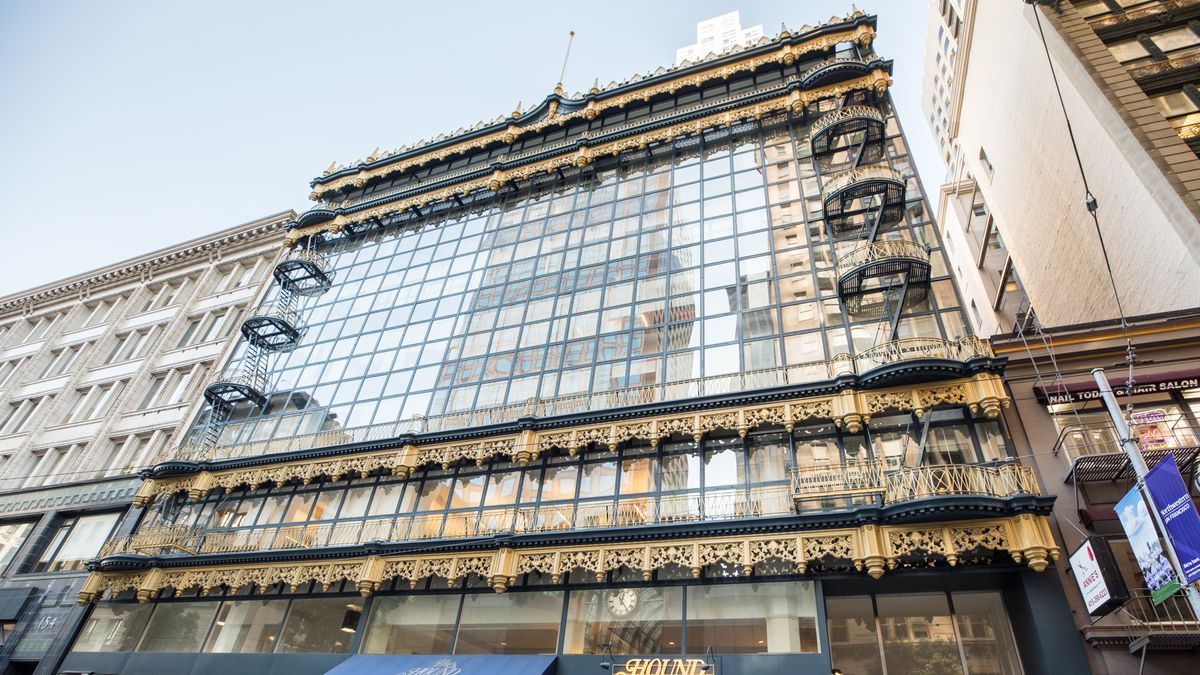
San Francisco has pioneered glass architecture since 1918 — and its permit system has been navigating building complexity ever since. Photo by Paul Chang via Curbed San Francisco
Which review track — OTC or in-house?
San Francisco has two paths for building permits, and which one your bathroom project goes through matters for timeline and cost.
Over-the-Counter (OTC). Same-day or few-week issuance at the Permit Center for projects that don't require Planning Department review or specialty engineering. If your project is entirely inside the existing footprint, doesn't touch load-bearing walls, and doesn't change the exterior, OTC is generally your path. DBI's kitchen and bath remodels page confirms that registered contractors can get these permits issued this way.
In-house review. A longer review process for projects that trigger Planning review, structural engineering review, Fire Department review, or other specialty reviews. Your bathroom might land here if:
You're in a historic district and the work affects historic character (see the historic-district note below)
You're expanding the bathroom footprint (taking space from a bedroom or closet at a scale Planning cares about)
You're touching a shared wall in a multi-unit building in ways that trigger structural review
Your building has known code compliance issues DBI wants addressed before approving further work
Most standard, footprint-neutral bathroom remodels qualify for the OTC path. A full gut job that doesn't touch structure, the exterior, or Planning-reviewable scope generally doesn't need in-house review. There's no official published figure for what share of San Francisco bathroom projects land on each track, so treat "most" as a general pattern rather than a precise statistic.
How much does a bathroom permit cost in San Francisco?
Permit fees are based on your project's stated valuation, using DBI's July 2026 building-permit fee table (Ordinance 112-26, effective July 12, 2026). Table 1A-A lists a Plan Review Fee and a Permit Issuance Fee separately. When DBI requires plans or review, the building-permit charge includes both. For an OTC application DBI accepts without plans, the Plan Review Fee does not apply; use the Permit Issuance Fee column instead. Confirm which path applies at intake, since the difference is material.
Using DBI's current fee tables as a reference:
A roughly $15,000 bathroom remodel: if plans/review are required, the building permit is about $1,056 ($679 Plan Review + $377 Permit Issuance). For an OTC no-plans path, the building-permit portion is about $377 before any separate sub-permits.
A roughly $50,000 higher-end remodel: if plans/review are required, the building permit is roughly $2,348 ($1,671 Plan Review + $677 Permit Issuance). For an OTC no-plans path, the building-permit portion is roughly $677 before any separate sub-permits.
Plumbing sub-permit: if the work fits Category 1P, covering a single residential kitchen or bathroom remodel with up to two inspections, the fee is a flat $290.
Electrical sub-permit: for a typical Category 1 bathroom scope of up to 10 outlets or devices, the fee is a flat $305.
Full permit package for a typical $30,000 full-gut remodel: if the building permit needs plans/review and the plumbing and electrical work fit the categories above, the Building + Plumbing + Electrical total is roughly $2,205 ($1,610 + $290 + $305). For an OTC no-plans path with the same sub-permits, it is roughly $1,101 ($506 + $290 + $305).
These figures will change as DBI updates its fee schedule. Verify current amounts directly with DBI or your contractor before budgeting, and don't rely on flat per-fixture "base fee plus add-on" estimates, since that's not how DBI's current fee structure works for these categories.
Impact fees and SFPUC water-conservation documentation: Impact fees are generally understood to apply to projects that add square footage or bedrooms rather than cosmetic remodels, and new fixtures are generally expected to meet California WaterSense standards. This review could not confirm bathroom-specific documentation requirements or a definitive impact-fee carve-out against a primary source, so confirm both points directly with DBI before assuming either does not apply to your project.
How long does a bathroom permit take in San Francisco?
DBI doesn't publish a single consolidated timeline document for bathroom remodels specifically, so treat the following as general, non-guaranteed patterns rather than official DBI commitments. Confirm current expectations with DBI or your contractor before planning around a specific date.
OTC track (most bathroom remodels): Often same-day or same-week issuance when paperwork is complete and correct at intake; expect longer if corrections are needed. Inspections are then scheduled between construction phases, including rough plumbing, rough electrical, and final.
In-house review track: Typically a multi-week-to-multi-month process from application to permit issuance, longer if Planning Department or another specialty review is required, and longer still if corrections are requested by any reviewer.
Construction timeline after permit issuance varies widely by scope. A cosmetic refresh, a full gut with fixture relocation, and a complex remodel involving structural work or expansion are very different projects. The permit usually isn't the bottleneck for a standard bathroom remodel; contractor availability, material lead times, waterproofing cure times, and inspection scheduling typically drive the total timeline more than permit review itself.
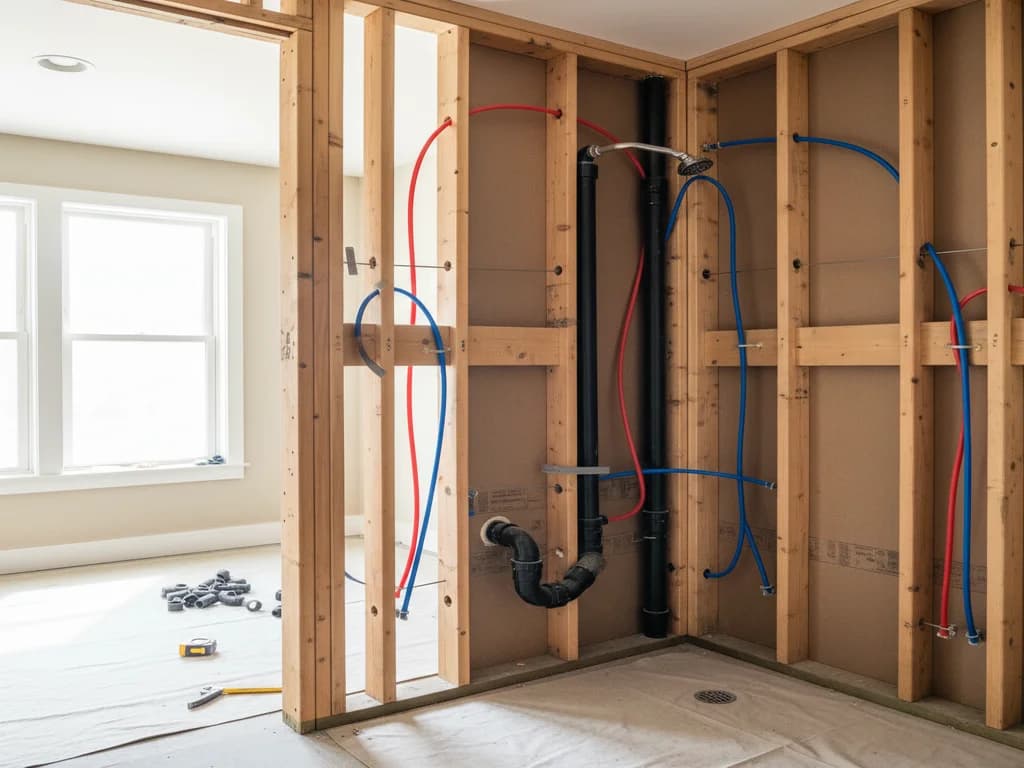
Rough-in plumbing inspection happens before walls close up — missing this inspection means demoing your new tile. Photo via Jen Wood House
Historic district properties: If your building is in an Article 10 historic district, Planning Department review may apply to certain interior work. Most bathroom work is exempt even within these districts, but check your building's specific designation before filing.
What are the most common bathroom permit mistakes?
1. Skipping the permit "because it's just a bathroom."
The most expensive mistake. Unpermitted bathroom work is a resale disclosure issue and can force retroactive inspection of finished work. DBI can require you to open up walls for inspection, which means demoing your new tile. Under DBI's current fee schedule, doing bathroom work with no permit at all triggers an investigation fee of 9 times the Permit Issuance Fee, plus the original permit fee itself. For a roughly $30,000 unpermitted bathroom project, that works out to about $5,060 (9 times a roughly $506 Permit Issuance Fee, plus the roughly $506 original fee), not a simple doubling. A 2x multiplier applies to a different scenario: work that exceeds the scope of a permit you already have. You also void manufacturer warranties on some fixtures if installation wasn't permitted.
2. Not pulling separate plumbing and electrical sub-permits.
Some homeowners get a building permit thinking that covers everything. It doesn't. Plumbing changes need a plumbing sub-permit filed by the licensed plumber. Electrical changes need an electrical sub-permit filed by the licensed electrician. Missing sub-permits fail inspection.
3. Owner-builder projects without proper documentation.
If you're doing the work yourself as an owner-builder, you can file for permits directly as the property owner — DBI's electrical-permit rules explicitly allow permits for work in a single-family dwelling to be issued to the homeowner when the homeowner will perform the work, and the same owner-builder framework applies under California Business & Professions Code §7044. But you have to sign an owner-builder verification form acknowledging that you understand the responsibility. The permitting authority will not issue a building permit until you've read, initialed, and signed the required declarations. Many homeowners think "owner-builder" means their contractor can work under their name to save on contractor licensing — it does not. Having a property owner obtain an owner-builder permit that implies the owner is personally supplying the labor when a contractor is actually doing the work is exactly the kind of misuse DBI's disclosure form warns against. You may also be treated as an employer, with associated liability exposure your homeowner's insurance may not cover, if you pay unlicensed helpers a total of $500 or more for the work. See our Owner-Builder Permits guide for details.
4. Missing the inspection sequence.
San Francisco requires inspections at multiple points during construction: rough plumbing (before walls close up), rough electrical (before walls close up), waterproofing/pre-tile (before tile goes on the shower), and final (when everything's done). Missing an inspection in sequence means opening up finished work to prove code compliance. Coordinate inspections with your contractor from day one.
5. Fixture non-compliance.
California requires WaterSense-labeled fixtures for new installations in many cases. Old-style high-flow toilets and showerheads generally will not pass. If your contractor installs a non-compliant fixture, you risk failing final inspection and having to replace it. Verify fixture compliance with your contractor before purchase.
6. Assuming OTC means "no drawings needed."
Even OTC permits usually require a floor plan showing fixture locations and a plumbing/electrical schematic. If your project has ANY relocation of fixtures, plan on providing dimensioned drawings. Contractors usually handle this; owner-builders often don't realize it's expected.
7. Ignoring the historic district / Coastal Zone question.
If your building is in one of San Francisco's Article 10 historic districts, Planning Department review may apply to certain interior work — particularly if you're touching a window, an exterior wall, or a shared party wall. The designated districts include Alamo Square, Blackstone Court, Bush Street-Cottage Row, Civic Center, Dogpatch, Jackson Square, Liberty Hill, Northeast Waterfront, South End, Telegraph Hill, and Webster Street. Pacific Heights and the Mission more broadly are not themselves Article 10 districts, though individual buildings anywhere in the city can carry their own landmark or conservation-district status. Most bathroom work is exempt even within these districts, but "most" is not "all." Check your building's specific designation before you file. Also confirm whether Coastal Zone review applies to your property.
Can I pull a bathroom permit myself as an owner-builder?
If you plan to do the work yourself:
You can file for building, plumbing, and electrical permits as the property owner
You must sign an owner-builder verification form
You cannot hire an unlicensed handyman as a "helper" and pay them like a contractor — that's misclassification
You are personally responsible for meeting code and passing inspections
Your homeowner's insurance may not cover you if something goes wrong
Most San Francisco homeowners hire licensed contractors for bathroom work involving plumbing or electrical — the code compliance and inspection sequencing is easier to get right with experienced trades. Owner-builder work is more commonly used for cosmetic-only projects (tile, painting, cabinet swap without plumbing changes), though this review could not independently confirm how common that split is.
What happens if there's unpermitted bathroom work at my property?
If you're buying a home with an unpermitted bathroom remodel, or you're a current owner discovering that previous work wasn't permitted:
Get a permit history report on the property (Permit Compass includes this in every project plan)
Consult DBI or a permit consultant before doing further work — new permits may require bringing prior unpermitted work up to code
If you're planning to sell, budget for a "make right" permit that legalizes the existing work — this review could not confirm a specific time horizon tied to this decision from a DBI source, so treat any such window as a rule of thumb rather than an official trigger
Sometimes the right answer is to leave existing unpermitted work alone rather than reopen it. Sometimes DBI requires legalization before approving any new permits on the property. This is a judgment call best made with someone who has seen many of these cases.
If your property also has an ADU or you're planning an addition, unpermitted bathroom work can complicate the ADU permit — DBI may require you to resolve existing violations before approving new work.
What Permit Compass tells you
If you enter your bathroom project details in our questionnaire, you get:
Every specific permit you need for your project (Building, Plumbing sub-permit, Electrical sub-permit, others)
Whether you qualify for OTC or need in-house review
The exact forms, pre-filled with your project details
The current fee schedule for your project's estimated value
The inspection sequence you'll follow
Planning Department review requirements if any apply (historic district, Coastal Zone, Special Use District)
A property-specific permit history so you can see what's been legally done at your address
If your project combines bathroom work with a kitchen remodel or an ADU addition, enter the full project scope — Permit Compass will map permits for the combined work.
For $49, you get the answers in one place instead of assembling them from DBI's PDF library, contractor advice, and Reddit threads.
If you're swapping the vanity but keeping the plumbing in the same location and using existing water lines, typically no permit is required for the vanity itself. If you're changing the sink location, adding a second sink, or changing the drain rough-in, you need a plumbing sub-permit.
Can I get a bathroom permit online?
For OTC-eligible projects done by registered contractors, DBI's instant online permits system — including a dedicated kitchen or bath remodel option — supports online submission for many project types. For in-house review projects, you'll typically work through the Permit Center at 49 South Van Ness in person or through your contractor.
Do I need a licensed contractor?
For plumbing and electrical work, yes — sub-permits must be filed by licensed contractors OR by the property owner as an owner-builder. You cannot hire an unlicensed person to do the work under a licensed contractor's permit.
What if I'm just retiling my shower?
If you're retiling over existing waterproofing without going down to studs, no permit is typically required. If you're removing tile and going to studs (which most quality tile jobs require to replace the waterproofing membrane), you need a permit because the assembly is being replaced.
How long is a bathroom permit good for?
This review could not confirm a specific standard validity period (such as "180 days") against a current DBI source document — DBI does publish separate processes for extending or renewing a permit, which implies permits do expire on some schedule, but confirm the exact current validity period and renewal process directly with DBI before assuming a specific number of days.
What's the penalty for unpermitted bathroom work?
Under DBI's current fee schedule, work done with no permit at all is subject to an investigation fee of 9 times the standard Permit Issuance Fee, plus the original permit fee — substantially more than a simple doubling. If DBI requires inspection of work that's been closed in, you may need to open walls to verify code compliance. Unpermitted work becomes a legal disclosure issue at sale.
Halfway through? Your specific bathroom remodel permit plan is 3 minutes away → $49
SF permit researcher and homeowner advocate. John helps San Francisco homeowners to navigate DBI and the Planning Department, and writes about the permit process to make it less intimidating.