In San Francisco, homeowners can act as their own general contractor and pull building permits directly from DBI — without hiring a licensed contractor. This is the owner-builder exemption under California Business and Professions Code §7044. It's a legitimate path that can save significant money, but it comes with real restrictions and personal liability that most homeowners don't fully understand before starting.

Guide
Owner-Builder Permits in San Francisco: What You Can (and Can't) Do
John Nolan·May 20, 2026·6 min read
Last updated: May 20, 2026
📄 Free download
Get the San Francisco Owner-Builder Permit Checklist
Every form, requirement, and inspection deadline for San Francisco owner-builder projects. Avoid the mistakes that cost the most.
Already subscribed? Download directly →
California law allows you to construct, alter, or repair improvements to your own home without a contractor's license — provided the work is on property you own and intend to occupy. DBI's permit application has a specific checkbox and declaration for owner-builders.
The key word is occupy. The owner-builder exemption is intended for homeowners improving their own home, not for speculative development or rental properties.
The Owner-Builder Declaration
When you apply for a DBI permit as an owner-builder, you sign a legal declaration (the Owner-Builder Disclosure Statement) that states:
- You understand you're assuming all risks as your own contractor
- You agree to comply with all applicable laws and codes
- You're aware that licensed contractors typically carry workers' compensation insurance (you'll need your own if you hire workers)
- You understand DBI may hold your permit if you sell within one year of completion
This isn't a bureaucratic formality — it's a legally binding acknowledgment of significant personal liability.
What You Can Do as an Owner-Builder in San Francisco
As an owner-builder, you can:
- Pull the building (alteration) permit in your own name
- Self-perform carpentry, framing, and finish work that doesn't require a specialty license
- Hire subcontractors for licensed trades (plumbing, electrical) — the subcontractors pull their own trade permits under their licenses
- Act as project manager — coordinate the project, schedule inspections, manage the job site
This is actually the most common owner-builder model: the homeowner pulls the general building permit but hires licensed plumbing and electrical subs who pull their own trade permits.
What You Cannot Do as an Owner-Builder in San Francisco
The owner-builder exemption does not remove permit, code, or inspection requirements. When hiring specialty contractors, verify the license appropriate to the work; ask DBI about eligibility before planning self-performed trade work:
- Plumbing (C-36 license): If you hire a plumber, use a properly licensed contractor. Confirm any proposed self-performed work and permit eligibility with DBI; the plumbing permit guide explains the scope that requires a permit.
- Electrical (C-10 license): If you hire someone to do electrical work, use a properly licensed electrician. DBI, not SFFD, handles electrical permits; see the electrical permit requirements and owner-builder eligibility guidance.
- HVAC (C-20 license): Ductwork, furnaces, and heat pumps require a licensed mechanical contractor.
- Roofing (C-39 license): New roof installations and most significant repairs require a licensed roofer.
- Structural pest control: Any work related to termite damage requires a licensed pest control operator.
The practical implication: A bathroom remodel may require a DBI alteration permit plus separate plumbing and electrical permits. Confirm who is eligible to file each permit and perform the work; an owner-builder declaration does not remove permit or inspection requirements.
The One-Year Resale Rule
California Business and Professions Code §7044(b)(2) creates a significant restriction on owner-builders:
If you build or improve a property using the owner-builder exemption and then sell the property within one year of completion, there is a legal presumption that the work was done for sale — not personal use — which voids the exemption.
This matters in San Francisco's hot real estate market. Homeowners who do a kitchen remodel and then list the house within 12 months can face issues with permit validity and potential liability.
The rule is rebuttable — you can provide evidence of genuine intent to occupy — but it's a complication most homeowners want to avoid.
Owner-Builder Requirements for Inspections
Inspections work the same as with a licensed contractor: DBI requires inspections at the same stages regardless of who pulled the permit. As an owner-builder, you (or whoever is on-site during the inspection) are responsible for:
- Scheduling inspections at the right project stage
- Ensuring work is ready before the inspector arrives
- Correcting any deficiencies and scheduling re-inspections
Failed inspections cost $207 per re-inspection. Experienced contractors know how to stage work to pass on the first try; owner-builders often need an extra inspection or two.
When Owner-Builder Makes Sense
The owner-builder path is genuinely a good choice for:
Experienced DIYers: If you have real construction experience — you've framed walls before, you understand building sequences — and are managing licensed subcontractors, owner-builder can save 15–25% on GC markup.
Simple projects with no licensed trade work: A deck, fence, or room partition that doesn't touch plumbing, electrical, or gas can be entirely self-performed.
Long timelines: If you're not in a rush and can work on weekends, owner-builder projects have much more flexibility than contractor-managed jobs.
When Owner-Builder Doesn't Make Sense
Complex structural work: Wall removal, beam installation, or foundation work are high-consequence activities. Without construction experience, errors can be costly or dangerous — and inspectors will scrutinize the work carefully.
Large projects: Managing multiple subcontractors, coordinating inspections, handling material deliveries, and keeping the project on schedule is a full-time job on larger remodels. Most people underestimate this.
Properties with plans to sell: The one-year rule creates real legal exposure. If there's any chance you'll sell within a year, use a licensed general contractor.
Historic or complex regulatory environments: Historic districts, hillside properties, properties with existing code violations — these require someone who knows San Francisco's bureaucratic landscape well.
Cost Comparison: Owner-Builder vs. Licensed GC
For a $50,000 kitchen remodel:
| Cost Category | Licensed GC | Owner-Builder |
|---|---|---|
| GC Markup (15–25%) | $7,500–$12,500 | $0 |
| Permit Pulling (included in GC or your time) | Included | Your time |
| Subcontractor Coordination | Included | Your time |
| Risk of Failed Inspections | Lower | Higher |
| Potential Savings | — | $7,500–$12,500 |
The savings are real — but so is the time investment. Budget 10–20 hours per week on a major remodel if you're the de facto project manager.
How to Pull an Owner-Builder Permit in San Francisco
-
Prepare your drawings: DBI requires plan-level drawings showing existing conditions and proposed work. For simple projects, basic floor plans and elevations suffice. For structural work, you need stamped engineering drawings.
-
Complete the DBI permit application: Confirm the application route for your scope with DBI at the Permit Center, 49 South Van Ness. The online permit application guide distinguishes homeowner filing options from services limited to registered contractors.
-
Sign the Owner-Builder Declaration: This is a separate form from the main application.
-
Submit: Over-the-counter or online, depending on project type.
-
Post permit on-site: The permit card must be visible from the street before any work begins.
-
Schedule inspections: Use the San Francisco DBI inspection scheduling system (online or phone) to request each required inspection.
Halfway through? Your specific whole-home remodel permit plan is 3 minutes away → $49
Get my permit plan →3 minutes. No account required.
JN
John Nolan
SF permit researcher and homeowner advocate. John helps San Francisco homeowners to navigate DBI and the Planning Department, and writes about the permit process to make it less intimidating.
Related reading

Guide
What Home Projects Require a Building Permit in San Francisco?
Check which San Francisco home projects typically need permits, from kitchen remodels and windows to decks, roofing, sheds, and trade work.
John Nolan·October 19, 2026·10 min read
Read more →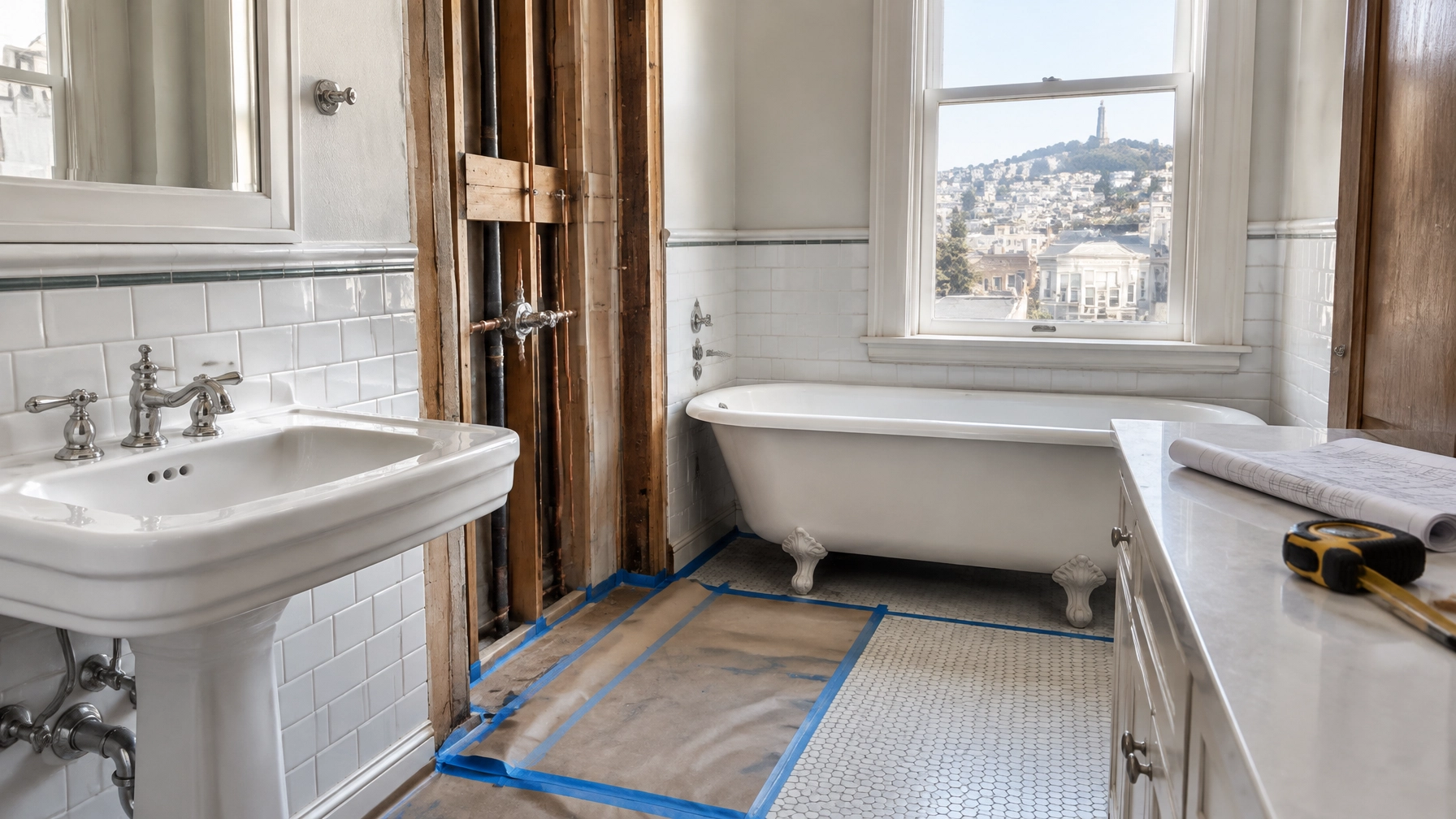
Guide
Bathroom Remodel Permit in San Francisco: When You Need One and How to Get It (Quick Guide)
A quick guide to San Francisco bathroom remodel permits: in-kind replacements, PermitSF eligibility, separate trade permits, current fees, and the steps to apply.
John Nolan·October 15, 2026·10 min read
Read more →
Guide
How to Get a San Francisco Building Permit Online in 2026 (Step-by-Step)
Choose the right San Francisco permit path, prepare your plans and forms, submit online, and avoid common delays. A step-by-step guide to PermitSF, OTC, and in-house review.
John Nolan·October 12, 2026·12 min read
Read more →Ready to get started?
Your whole-home remodel project needs specific permits.
Answer a few questions and we'll deliver:
- ✓Every permit required
- ✓Pre-filled application forms
- ✓Current fee estimates
- ✓Inspection sequence
- ✓Property-specific requirements
3 minutes. No account required.