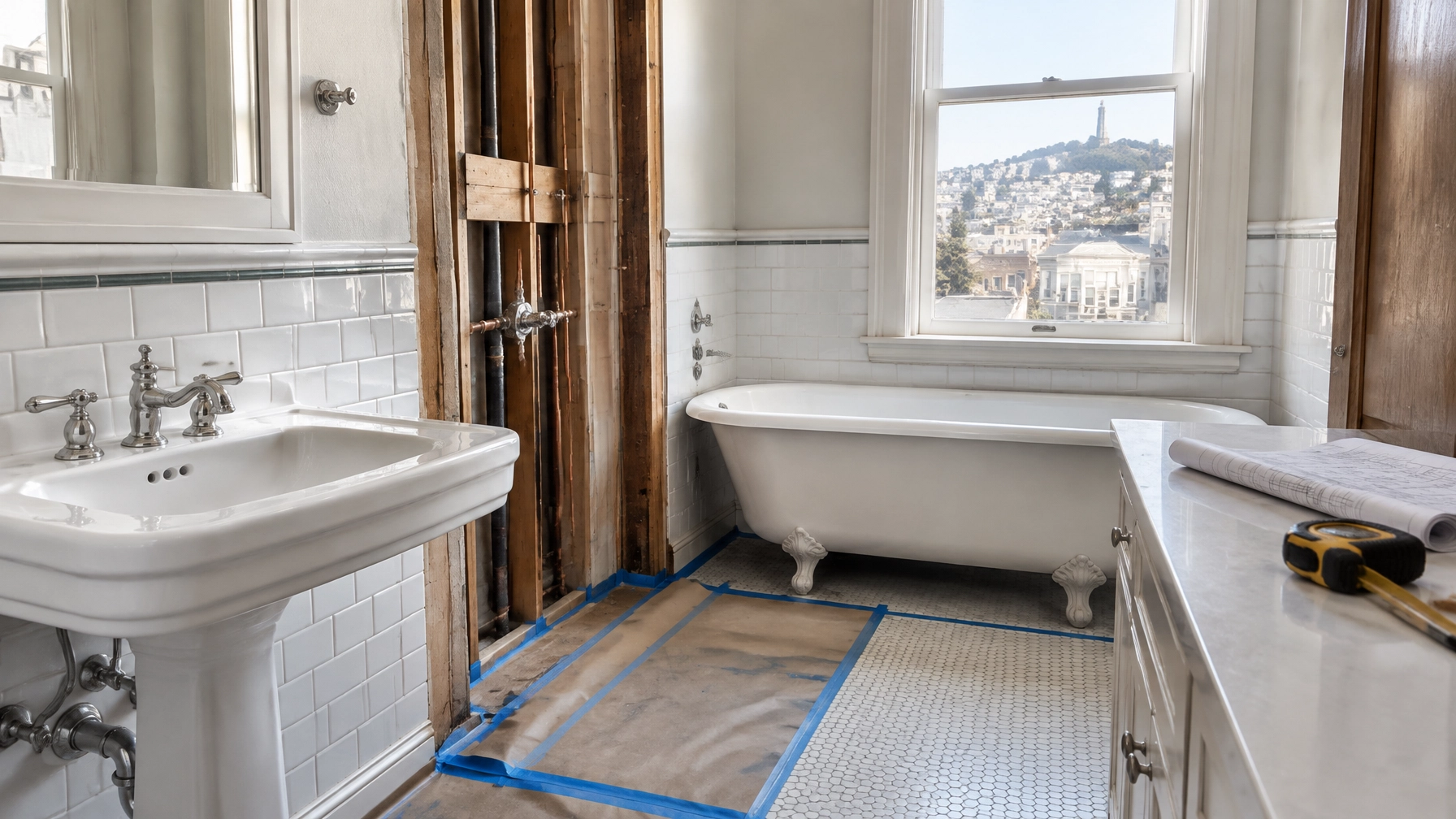
If you're planning a bathroom remodel, the key question is whether your work changes the room's fixtures, plumbing, wiring, walls, or layout. In San Francisco, replacing bathroom fixtures in-kind generally still requires a permit, even when the new fixtures stay in the same places.
The good news: eligible work may qualify for a no-plan application through PermitSF. This quick guide explains what that means, which permits to check, what affects fees, and how to get your San Francisco bathroom remodel permit application moving.
For a broader discussion of review tracks, timelines, and common mistakes, see our full San Francisco bathroom remodel permit guide.
Does your bathroom remodel need a permit?
San Francisco DBI says you need a permit before renovating or replacing bathroom fixtures. A same-location replacement may qualify for the city's online kitchen and bath permit, but "like-for-like" does not automatically mean "no permit."
A no-plan permit means the application does not require plans for eligible work. It is still a permit, and you must wait for it to be issued before starting work.
Some limited finish work may be exempt under the building code, including painting and certain minor interior finish repairs. Don't assume all finish replacement is exempt: the code's flooring exemption does not cover bathrooms and toilet rooms. Check with DBI if your scope involves removing bathroom flooring or extends beyond simple surface work.
One more 2026 rule to know before you plan a trip downtown: since September 14, 2026, no-plan kitchen and bath, plumbing and mechanical, and electrical permits can only be filed online through PermitSF. Paper applications are no longer accepted for these permit types, and you will not apply for them in person at the Permit Center. You can still get one-on-one help at the Permit Center to create an account and file on a city computer, but the application itself goes through the portal.
When the no-plan bathroom permit may fit
The city's online kitchen and bath application is for in-kind, nonstructural work that does not require plans. To use it, the bathroom must be in a legally permitted space in either:
- An R-3 residential building, or
- An R-2 apartment building constructed before 1991
The work also cannot involve removing or moving walls. Check your building's classification and construction information in the city's Property Information Map.
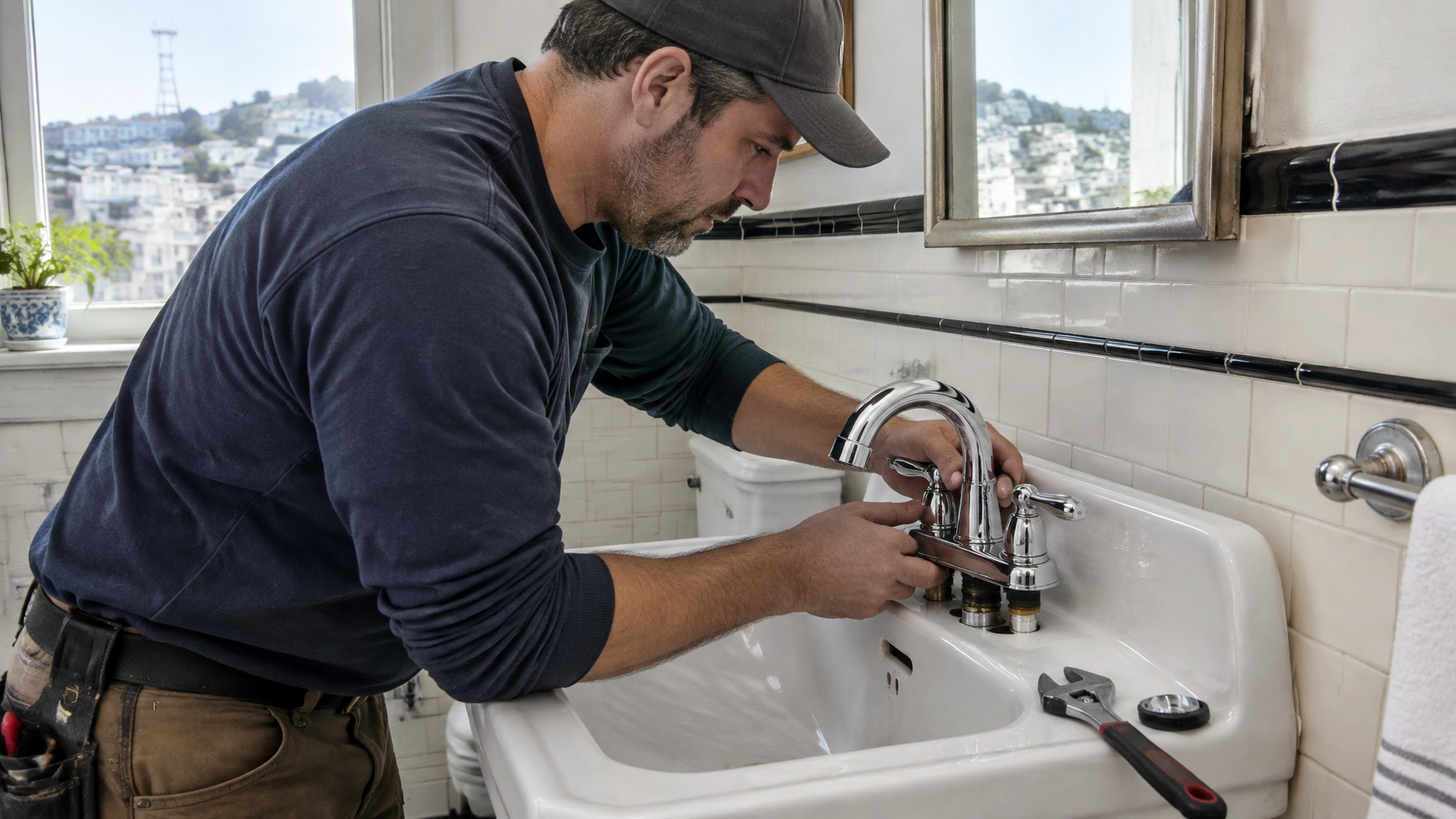
Examples that may fit the no-plan route include replacing a sink, toilet, tub, or shower fixture in-kind and keeping the layout unchanged. DBI makes the final determination based on your property and full scope.
If the work requires plans in an R-3 building, is in an R-2 building constructed after 1991, or is for legalizing an unpermitted bathroom, the city directs you to get an Over-the-Counter building permit with plans. If the building is not R-2 or R-3, the city sends the project to in-house review. If the building was constructed in 1991 or its classification is unclear, confirm the correct path with DBI.
Which permits might apply?
One bathroom project can involve more than one permit. List every part of the work before applying.
Building permit
A building permit may cover the bathroom remodel itself, including qualifying in-kind fixture replacement. Layout changes, wall work, or other work requiring plans can change the application path.
Plumbing permit
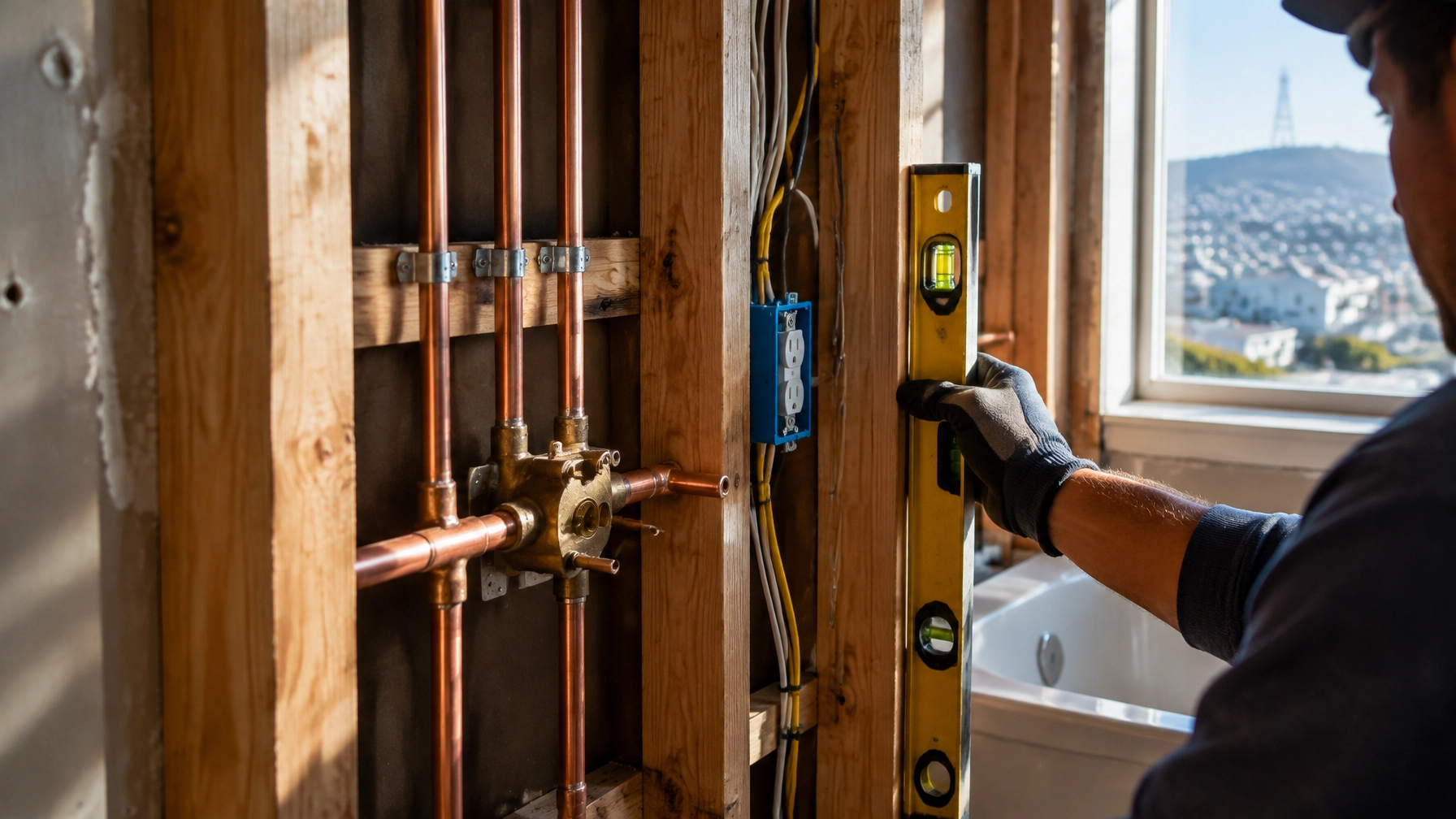
Check for a separate plumbing permit if your project cuts into or replaces pipes, moves a fixture, or includes work such as a shower pan. DBI specifically requires a permit before cutting into or replacing regulated piping, particularly pipes that will be concealed in a wall or buried.
For more detail, see our San Francisco plumbing permit guide. DBI's plumbing permit page lists the exemptions in San Francisco Plumbing Code Section 104.2, which cover work such as repairing leaks without cutting into piping, unstopping traps or waste pipes, replacing toilets, and faucet or angle stop replacement that does not require cutting into or removing piping.
An exemption from a separate plumbing permit does not automatically exempt the bathroom remodel from its building permit requirements.
Electrical permit
A separate electrical permit is generally needed for new wiring or alterations, extensions, or additions to an existing electrical installation. That can include adding or moving wired lights, outlets, switches, a fan, or a circuit.
A fixture replacement that does not alter the electrical installation may be treated differently. DBI's electrical permit page points to the exemptions in San Francisco Electrical Code Section 89.121, which cover items like replacing luminaires of 50 pounds or less, domestic appliances, fuses, controls, switches or receptacles rated 20 amperes or less, and same-type-and-rating circuit breakers, when no change in existing wiring is involved. Confirm your exact scope with DBI. Our San Francisco electrical permit guide covers common examples.
What should you expect to pay?
There isn't one flat fee for a San Francisco bathroom remodel permit. DBI fees depend on the project scope and valuation, and plumbing and electrical permits have separate fee schedules. If your project requires plans, plan review fees may also apply.
DBI lists a minimum valuation of $20,552 per bathroom in its cost schedule. This is a valuation used in calculating permit fees, not the permit fee itself, and not an estimate of your construction cost. Your actual amount depends on how DBI classifies the work and which permits and inspections apply.
Before you submit, check the city's current DBI fee schedules, including the building, plumbing/mechanical, and electrical schedules.
Two categorical fees cover a lot of typical bathroom work. Under Table 1A-C, Category 1P, a single residential unit doing one plumbing fixture installation, a shower pan, or a single bathroom remodel, is $290. Under Table 1A-E, Category 1, general wiring in a residential building up to 10,000 sq. ft. with up to 10 outlets and/or devices is $305 (11 to 20 outlets is $450). A permit may include more than one category, and each category is charged separately.
Fee note: Fees in this guide reflect DBI's fee schedules that apply to permits issued on and after July 12, 2026, and are subject to change.
How to get your bathroom remodel permit
1. Write down the full scope
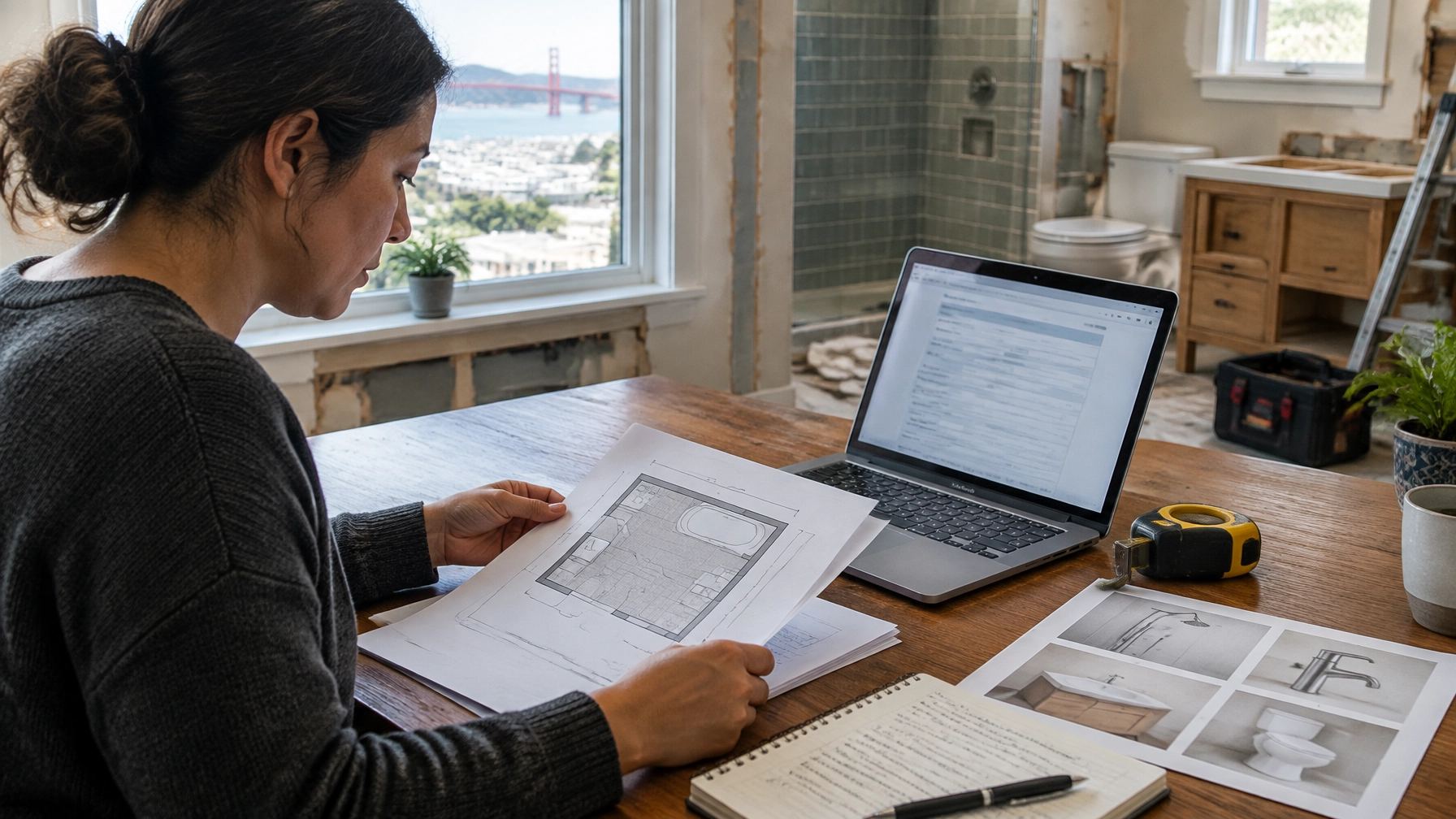
List fixtures, finishes, plumbing, electrical work, wall changes, and layout changes. Note which fixtures stay in place and which move. This makes it easier to choose the right application path.
2. Check the property and bathroom status
Use the city's Property Information Map to confirm the building type and construction year. The bathroom must be legally permitted for the no-plan kitchen and bath application.
3. Choose the right permit path
If your project is in-kind, nonstructural, does not require plans, and meets the property eligibility rules, start with the city's kitchen or bath remodel permit instructions.
If the work changes the layout or needs plans, review DBI's Over-the-Counter remodel instructions. More complex projects may need another review path.
For a wider explanation of online applications, plans, fees, and review routes, see our guide: How to Get a San Francisco Building Permit Online in 2026 (Step-by-Step).
4. Gather application details
Be ready to provide the property and project information requested in PermitSF, including the bathroom location, estimated work valuation, and whether plumbing or electrical work is included. If a contractor is applying, gather the requested contractor information and authorization documents.
The city allows property owners and licensed B contractors to apply for the kitchen or bath permit. Applying as the property owner means you and your authorized agents are held liable for any construction work done on the permit.
If you apply yourself, the limits are narrower than the general owner-builder exemption, and they depend on your building type:
- R-2 apartment building owners can apply to do only sheetrock, drywall, or cabinetry work themselves. They must hire contractors for any electrical or plumbing work.
- R-3 single-family homeowners can only apply to do sheetrock, drywall, or cabinetry themselves if the home is their primary residence. They can do their own electrical or plumbing work only after speaking to an inspector.
If you're a B contractor authorized for Express Permits on PermitSF, you can skip city staff review. Follow the portal's payment and issuance steps before beginning work.
5. Apply and add related permits
Submit the eligible application through PermitSF. If you indicate that plumbing or electrical work is part of the project, the application will prompt you to complete related trade permit applications. You can assign those applications to others in the portal.
PermitSF is an online application and permit-management system. Its 2026 rollout made eligible kitchen and bath permits available online; it did not remove the requirement to get permits for covered work.
If you're a B contractor with only a B license, the city says you'll only get the related electrical and plumbing permits right away if those permits are directly associated with the kitchen or bath permit in PermitSF. Contractors with only a B license who need unrelated trade permits follow the standard trade permit application process.
6. Wait for issuance and schedule inspections
Do not begin permitted work while the application is pending. After issuance, request inspections through your PermitSF account. Have plumbing and electrical work inspected before covering pipes or wiring.
The city says related electrical and plumbing work must pass final inspection before you can schedule the final inspection for the kitchen or bath remodel permit.
Make your next step clear
First, confirm whether your project keeps the existing layout and whether the bathroom is legally permitted. Then identify plumbing and electrical changes. Those answers will help you choose the correct path and avoid treating a no-plan permit as an exemption.
Permit Compass can help you check your project scope, identify likely permit requirements, and prepare pre-filled applications. Start a project check to see a permit plan tailored to your renovation.
Sources
- SF.gov: Apply for a kitchen or bath remodel permit
- SF.gov: Where to apply for your permit
- San Francisco Building Code Section 106A.2: Work exempt from permit
- SF.gov: Apply for a plumbing and mechanical permit
- SF.gov: Apply for an electrical permit
- SF.gov: DBI fees and current fee schedules
- SF.gov: What to expect for new online permits (September 14, 2026 update)
- San Francisco Plumbing Code Section 104.2: Exempt work
- San Francisco Electrical Code Section 89.121: Exemptions
- DBI Table 1A-C: Plumbing/Mechanical permit fees (PDF)
- DBI Table 1A-E: Electrical permit fees (PDF)
Disclaimer: This guide is for general information only and is not legal, code, or permit advice. Permit Compass is not affiliated with the City and County of San Francisco. Always confirm current requirements with the city before you apply.