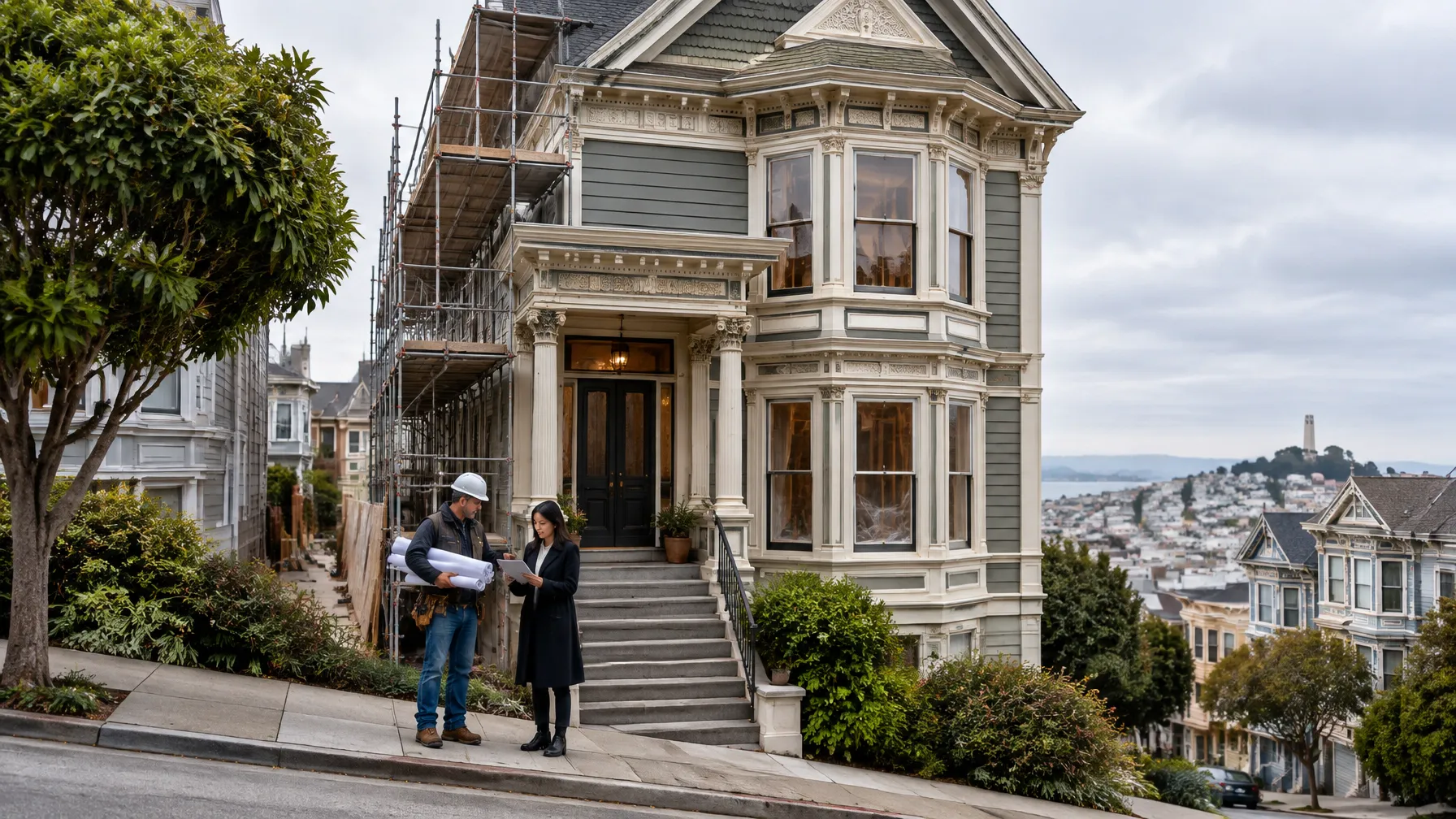
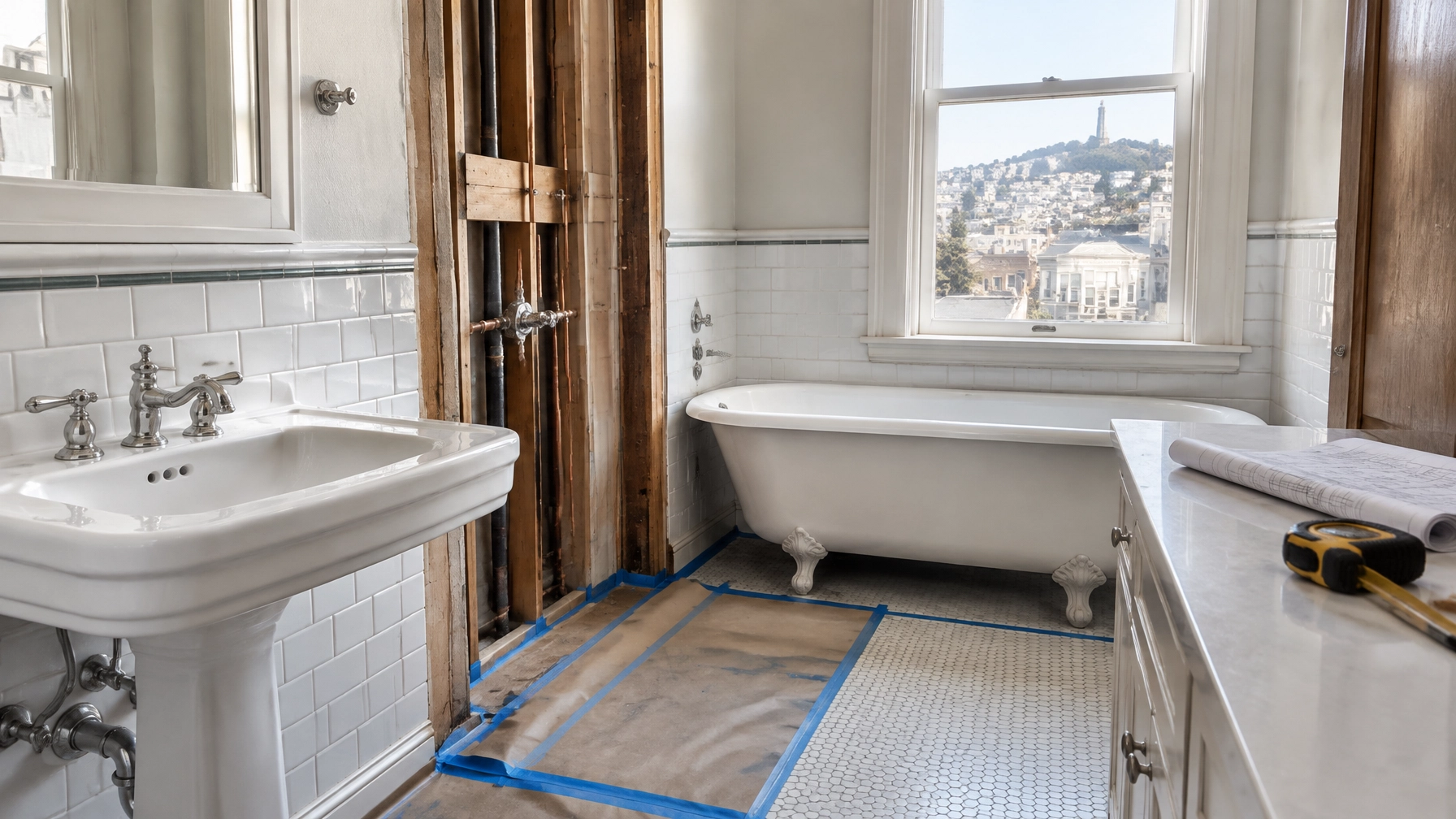
The San Francisco Chronicle published a follow-up to their permit data map this week, this time analyzing how long different types of home projects actually took from permit issuance to completion.
The headline number is jaw-dropping: the median San Francisco ADU permit takes 593 days — roughly 1.6 years — to go from issuance to completion.
But some categories are shockingly fast. Roofing permits complete in a median of 23 days. Solar in 42 days.
Same city, same DBI, wildly different timelines. Here's what the numbers actually measure, why the spread is so wide, and how to think about them when planning your project.
The Chronicle's timeline data by project type
Median days from permit issuance to recorded completion (July 2025 – June 2026):
| Project type |
Median days |
Sample size |
| Roofing |
23 |
3,026 permits |
| Solar |
42 |
100 permits |
| Windows |
82 |
749 permits |
| Doors |
93 |
37 permits |
| Bathroom |
98 |
579 permits |
| Kitchen |
114 |
282 permits |
| ADU |
593 |
67 permits |
Two things immediately jump out from that table.
First, the spread. ADUs take 26x longer than roofing. Both are residential permits. Both go through DBI. Both involve inspections.
Second, the sample sizes. There were 3,026 roofing permits completed in the year but only 67 ADU permits completed. Roofing is high-volume, standardized, low-friction. ADUs are rare, custom, and complex.
The critical caveat the Chronicle names but understates
The Chronicle's own methodology note is important:
"It's not a perfect measure of how long the project actually took to complete because a homeowner may have received a permit, but waited to actually start construction."
This matters more than the caveat suggests. The permit-to-completion metric isn't the same as construction time. It measures the elapsed time from when the permit was issued to when it was closed out — which includes gaps for contractor scheduling, waiting for inspections, and the homeowner scheduling the final close-out.
For roofing at 23 days, that metric is likely close to real project time (roofers typically start soon after permit issuance and inspection happens quickly).
For kitchens at 114 days or ADUs at 593 days, the metric significantly overstates active construction time. Much of the elapsed time is waiting — for contractors, for inspectors, and for the homeowner to close out the permit after construction completes.
Why ADUs take 1.6 years
The 593-day ADU median needs additional context. That measures only the time from PERMIT ISSUANCE to completion. It doesn't include the many months before permit issuance.
The same Chronicle analysis also reported a median filing-to-issuance time of 398 days for ADU permits — over 13 months just to get the permit issued, before the 593-day issuance-to-completion clock even starts. For most other residential project categories in the same dataset, filing-to-issuance was near-zero (at least half of non-ADU permits were issued the same day they were filed), which makes ADUs a clear outlier at both stages of the process.
Adding the two reported stage medians gives 991 days — nearly 2.7 years (593 + 398 = 991). This arithmetic sum is not a measured median total-project timeline: the stages may represent different subsets, and the sum of medians is not generally the median of summed durations. Use the two stage figures separately, not 991 days as a prediction for a typical ADU.
Why so long? Several factors compound:
- Multi-department review (DBI + Planning + Fire + PG&E)
- Multiple correction rounds typically required
- Structural engineering coordination
- Historic district or Coastal Zone triggers if applicable
- Utility connections for new dwelling units
- Impact fee coordination
- Actual construction time
- Inspection scheduling gaps
- Homeowner-side delays (financing, design changes, contractor availability)
The 593-day median isn't "San Francisco is broken." It's the sum of many small delays, each with defensible reasons, compounding across a complex project.
Why roofing is fast
23 days from permit issuance to completion for the median roofing project. Under a month for a project category that most homeowners think of as fast.
Why does roofing work?
1. Standardized scope. Reroofing is nearly the same job every time. Same materials, same crew, similar inspections.
2. Zero external review triggers. No Planning Department involvement, no historic district review unless material changes, no zoning questions.
3. High contractor volume. Multiple established San Francisco roofing contractors compete for work, so scheduling tends to be responsive.
4. Simpler inspection process than most other categories.
5. Homeowner urgency. Roofing usually happens because the roof is failing. Nobody delays a roof replacement.
The lesson: when you can design your project to look like San Francisco's fast lane (standardized scope, no discretionary triggers, simple inspection), your permit timeline collapses.
The kitchen homeowner who redesigns their layout, moves the sink and stove, opens a wall, and adds a range hood venting through the exterior is triggering multiple review paths. The one who does a like-for-like refresh in the same footprint moves through the process much faster.
What this data actually means for your project
If you're planning a San Francisco renovation, use the Chronicle's timeline data as ONE input alongside:
1. Your scope's complexity. Are you triggering Planning review? Adding square footage? Moving fixtures? Each trigger adds time. The Chronicle's median assumes typical scope for that category — your project may be simpler or more complex.
2. Your property's specifics. Historic district status, Coastal Zone status, prior unpermitted work, or Special Use District designation all extend timelines beyond the median.
3. Your contractor's San Francisco experience. Contractors with substantial San Francisco DBI experience typically move faster through corrections than first-time filers.
4. Whether you're funding construction from cash flow or a loan. Construction loans have carrying costs. A significant delay on any major project can add meaningful interest costs before construction even completes.
Homeowner action plan
1. Design for the fast lane when possible.
Every "trigger" you can avoid — Planning review, structural engineering, historic considerations, exterior visibility — saves weeks. Like-for-like scope in the same footprint is the fastest path.
2. File permits when you're actually ready to build.
Don't pull permits and then wait months for contractor availability. Permits have expiration windows and starting the clock too early creates pressure later. Use the online filing guide to prepare the application, allowing for the review time your scope requires before scheduling construction.
3. Schedule inspections proactively.
Don't let permits go dormant after construction. The homeowner-side scheduling delays are a major contributor to the "long" completion times in the Chronicle data.
4. Choose contractors with San Francisco-specific experience.
Ask specifically: "How many San Francisco DBI projects have you completed in the last 3 years?" Not "how many years experience" — San Francisco-specific experience is what matters.
5. Use the Chronicle data as a floor, not a ceiling.
The median is what half of projects beat. If everything goes right, you can be in the faster half. If you compound complexity, you can be in the slower half.
Related guides
Sources
Want a realistic timeline estimate for your specific San Francisco project? Permit Compass analyzes your scope and property to give you a personalized timeline range — not just the citywide median. $49 once.